
Railways, Metro, Tramways – Ultrasonic Testing
Non-destructive inspection of rail infrastructure is essential for maintaining the safety and reliability of railway, metro, and tram networks. Increasing traffic volumes and higher operating speeds place significant stresses on rails and welds, which can lead to fatigue damage and the development of internal defects.
ScanMaster provides fully automated ultrasonic inspection systems for in-service rail inspection, enabling the detection of cracks, inclusions, voids, and weld discontinuities. Our solutions deliver accurate defect detection, real-time reporting, and enhanced network safety, helping operators maximize reliability and infrastructure availability.
ScanMaster offers a variety of fully automated ultrasonic inspection systems for rail infrastructure integrity monitoring and defect detection in railway, metro, and tram networks.
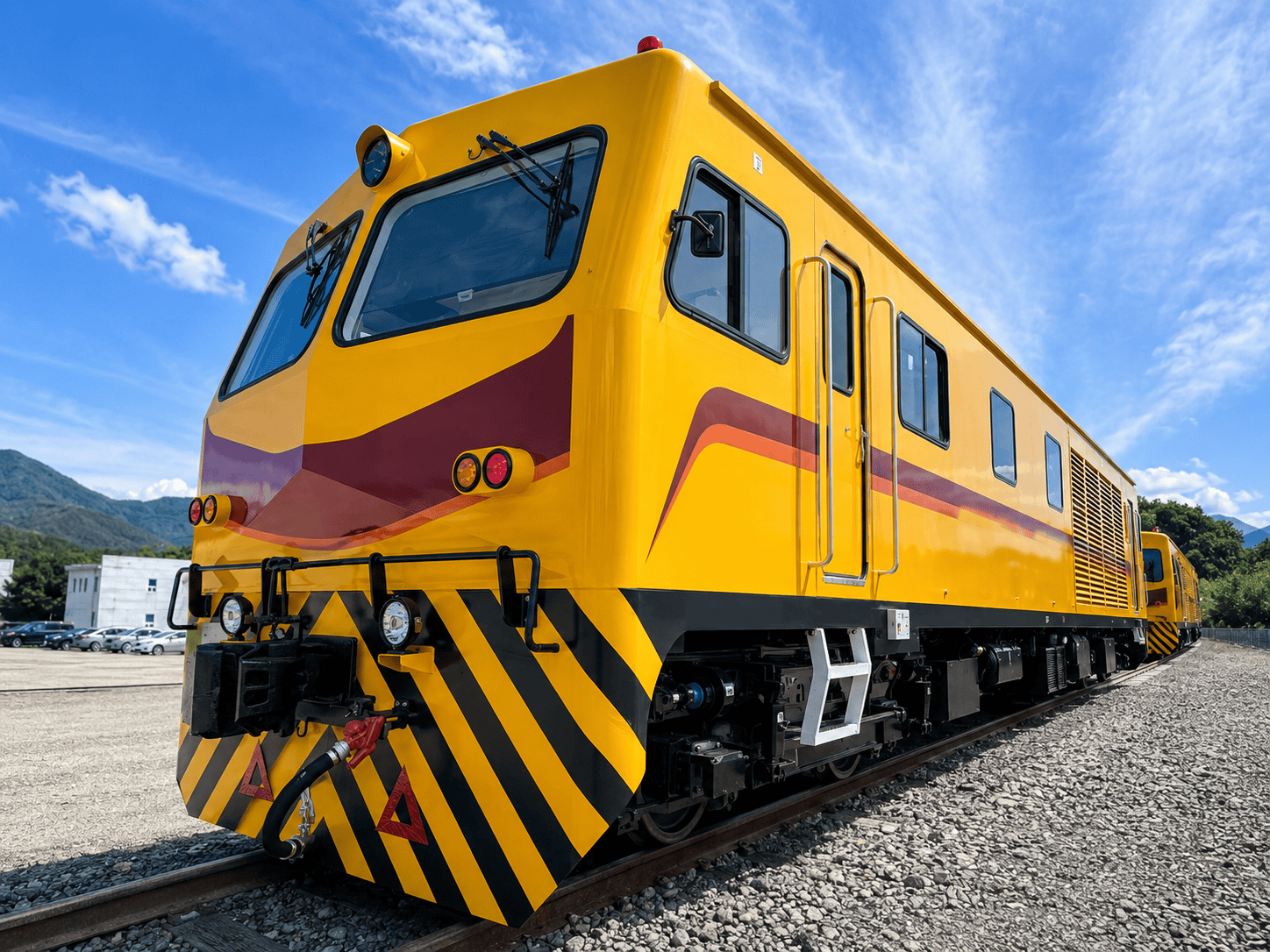
High-Speed Rail Ultrasonic Inspection System (HR-UT OEM)
Vehicle-Integrated Ultrasonic Inspection System for High-Speed Rail Networks
The HR-UT (OEM) is a vehicle-integrated ultrasonic rail inspection system engineered for installation on diagnostic and maintenance rail vehicles.
The system supports both RSU (wheel-based Roller Search Unit) and SLED-based inspection technologies.
The system supports high-performance ultrasonic inspection at operating speeds of up to 80 km/h, enabling efficient network-wide condition monitoring with minimal disruption to rail operations. Its modular OEM architecture allows adaptation to a wide range of inspection vehicles and rail platforms while delivering accurate defect detection, real-time data acquisition, and comprehensive inspection reporting.
Urban Rail Ultrasonic Inspection System (UR-UT)
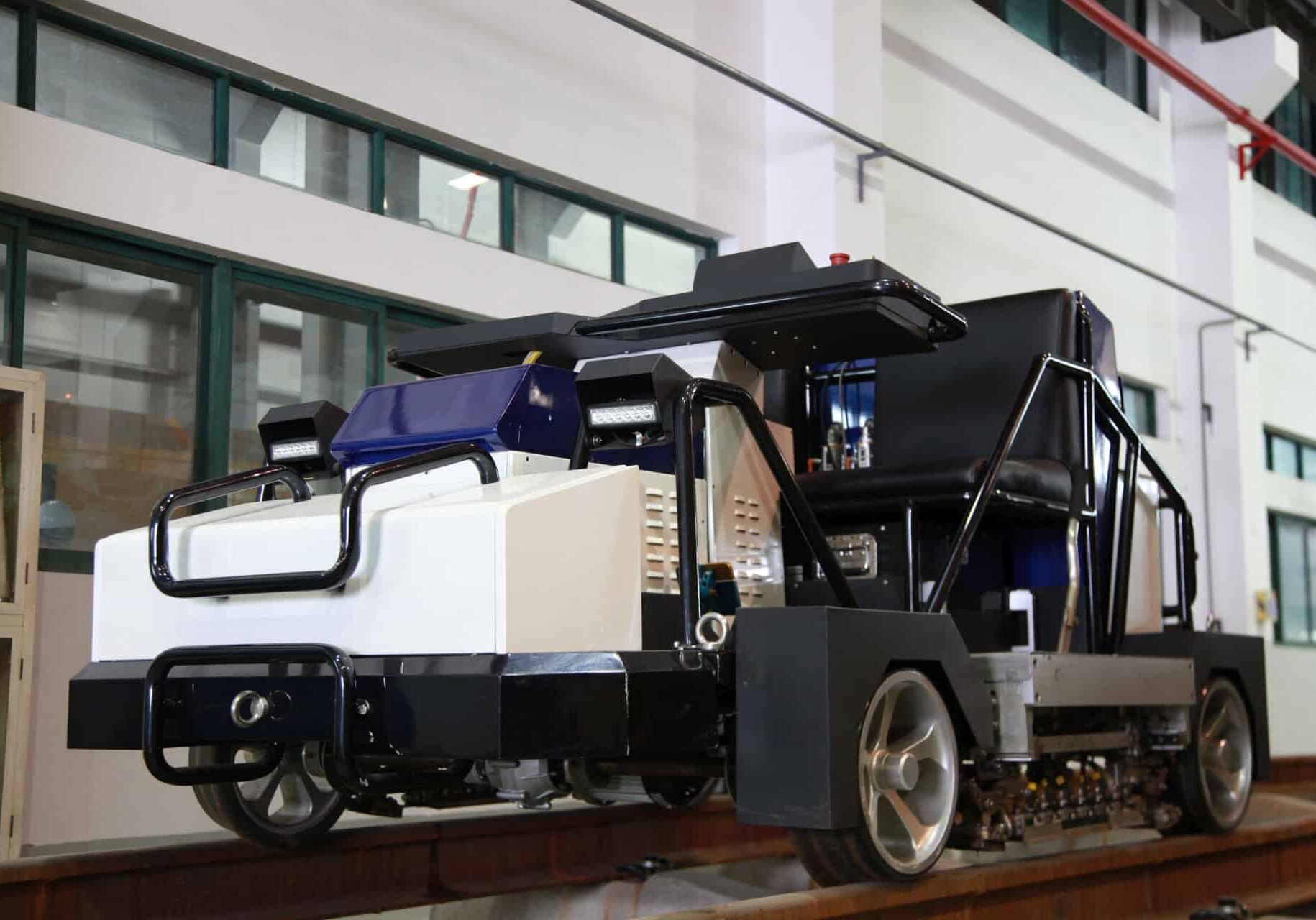
Ultrasonic Rail Inspection System for Tram, Metro, and Urban Rail Networks
The UR-UT is a compact ultrasonic rail inspection system designed for tram, metro, and urban rail infrastructure. Operating on a self-propelled electric trolley, the system enables efficient in-service inspection of rails and welds while providing reliable detection of internal defects and discontinuities.
Designed specifically for urban rail environments, the UR-UT supports both ultrasonic rail inspection and optional track geometry measurement, allowing infrastructure operators to perform comprehensive condition assessment and maintenance planning. Its compact, electrically powered platform ensures safe and efficient operation in metro systems, tramways, and other urban rail networks.
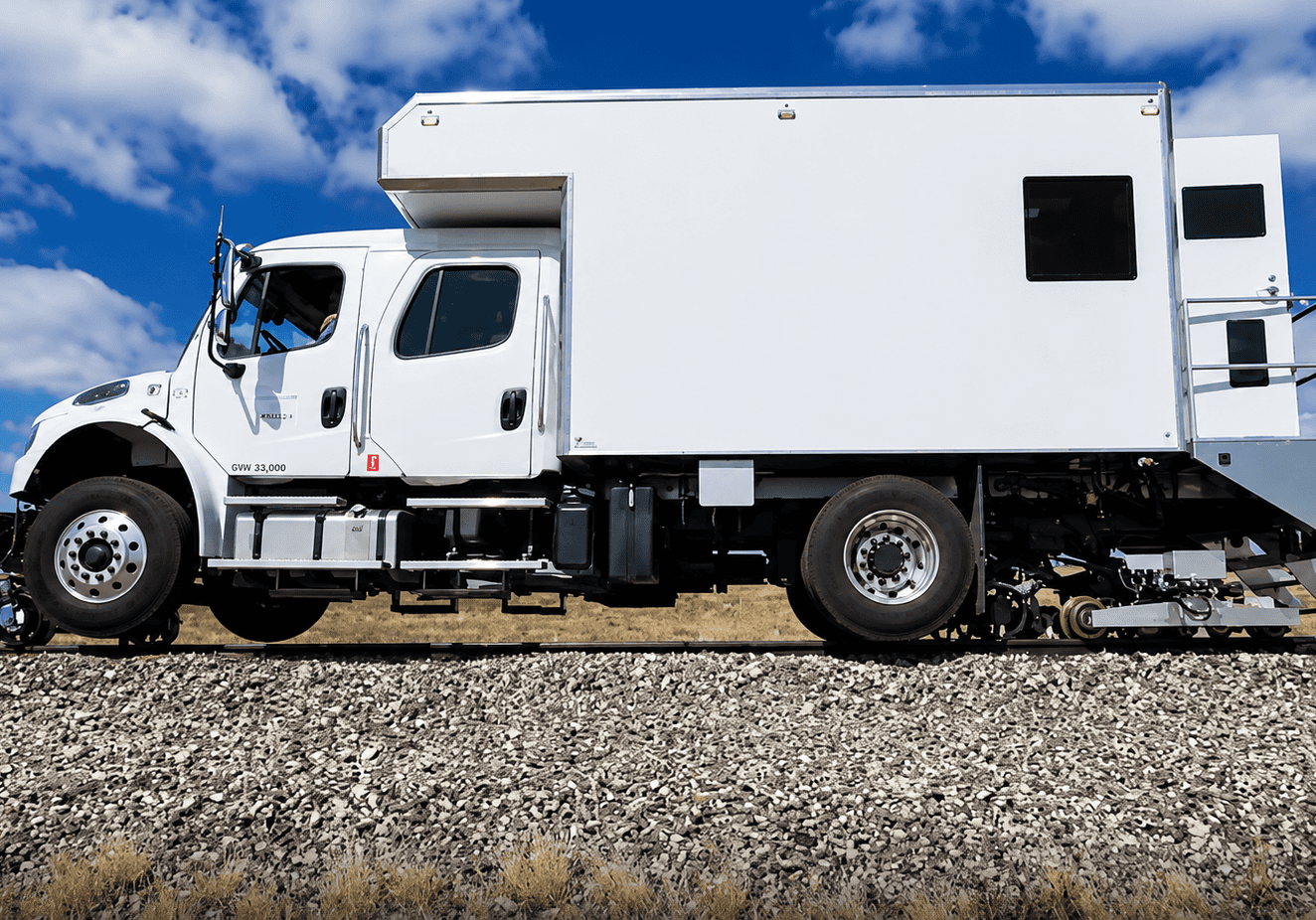
Hi-Rail Ultrasonic Inspection System (HRX-UT)
OEM-Integrated Ultrasonic Inspection System for Road–Rail Vehicles
The HRX-UT is a compact OEM-integrated ultrasonic rail inspection system engineered for installation on road–rail (Hi-Rail) vehicles. Designed for in-service rail inspection, the system enables reliable detection of internal rail defects and weld discontinuities while seamlessly integrating with the mechanical, electrical, and operational interfaces of the host vehicle.
The system supports both RSU (wheel-based Roller Search Unit) and SLED-based inspection technologies, allowing the inspection configuration to be optimized according to operational requirements, rail conditions, inspection speed, and vehicle platform. Its modular architecture provides flexibility for deployment across railway, metro, and tram networks while delivering accurate defect detection and real-time inspection data.
Railways
Non-destructive inspection of rail tracks and rolling stock is greatly increasing in significance due to growing amounts of rail traffic carrying heavier loads at higher speeds.
High external stresses on the rail superimposed with internal stresses can result in considerable load on rails and welding joints. Excessive load could extend existing flaws, potentially leading to rail fracture.
Monitoring of track and rolling stock integrity and detection of internal defects, cracks, or voids ensures continuous smooth operation of railroad transportation and plays a critical role in avoiding potentially catastrophic failures. ScanMaster offers a variety of fully automated ultrasonic inspection systems for identifying defects in rails and rolling stock during both part production and in-service inspection
Metro Rail Inspection
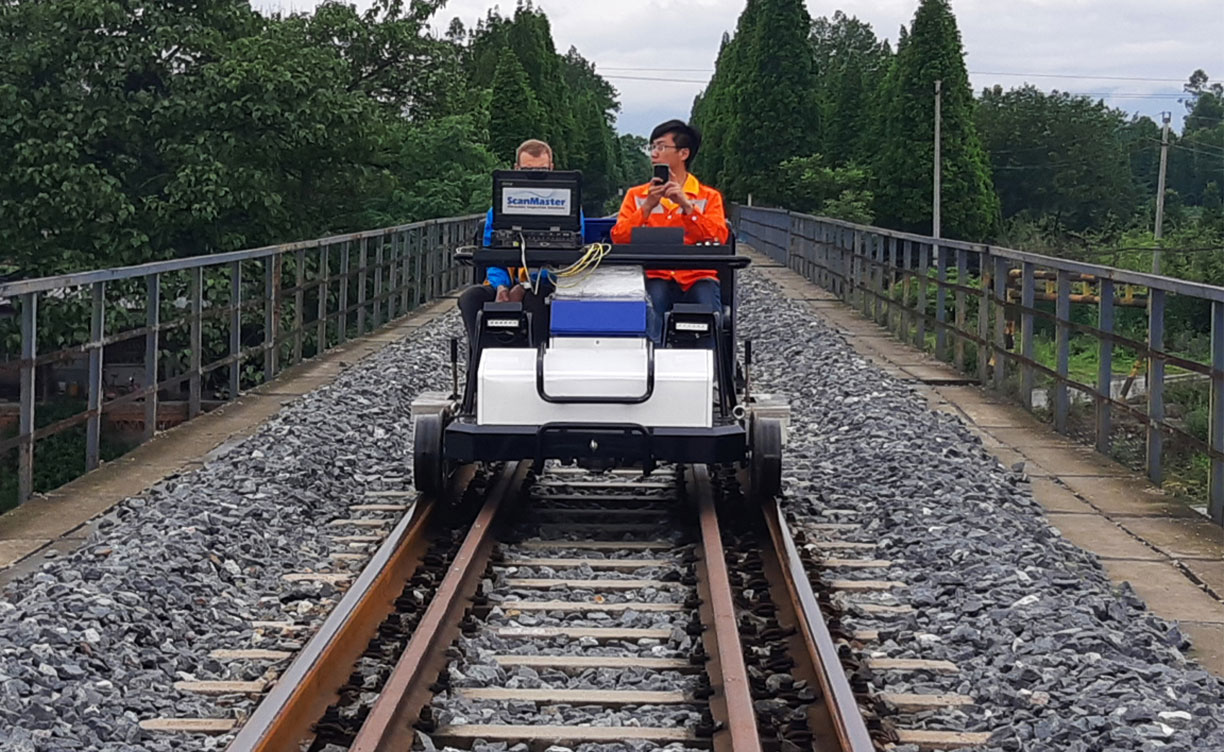
For efficient inspection of in-situ metro and underground railways, ScanMaster has developed the UT-M18. The UT-M18 pairs ScanMaster’s TrackMaster technology (based on the well-known SFB-100 model) with a self-propelled electric powered trolley. This combination provides a cost-effective testing solution for inspection in demanding and harsh environments.
The UT-M18, which utilizes the TrackMaster software package, provides real-time detection and recording of railway flaws; while generating comprehensive reports of inspection setups and collected data.
What Is Ultrasonic Rail Testing?
Ultrasonic Rail Testing (URT) is a non-destructive testing (NDT) technology used to detect internal defects in railway rails before they become critical safety hazards. By transmitting high-frequency ultrasonic waves into the rail head, web, and foot, the system can identify cracks, inclusions, transverse defects, bolt-hole cracks, and other discontinuities hidden beneath the rail surface.
Modern ultrasonic rail inspection systems use multiple probes positioned at different angles to provide complete coverage of the rail profile. Reflected ultrasonic signals are analyzed in real time to determine the location, depth, orientation, and severity of detected defects.
Why Is Ultrasonic Rail Inspection Important?
Internal rail defects are one of the leading causes of rail failures and potential derailments. Since many defects begin below the rail surface, they cannot be detected through visual inspection alone. Regular ultrasonic testing allows railway operators to identify developing defects at an early stage, enabling predictive maintenance and reducing the risk of catastrophic failures.
Benefits of ultrasonic rail testing include:
- Early detection of internal rail defects
- Improved railway safety and reliability
- Reduced maintenance costs
- Prevention of rail breaks and derailments
- Compliance with railway inspection standards
- Extended rail service life